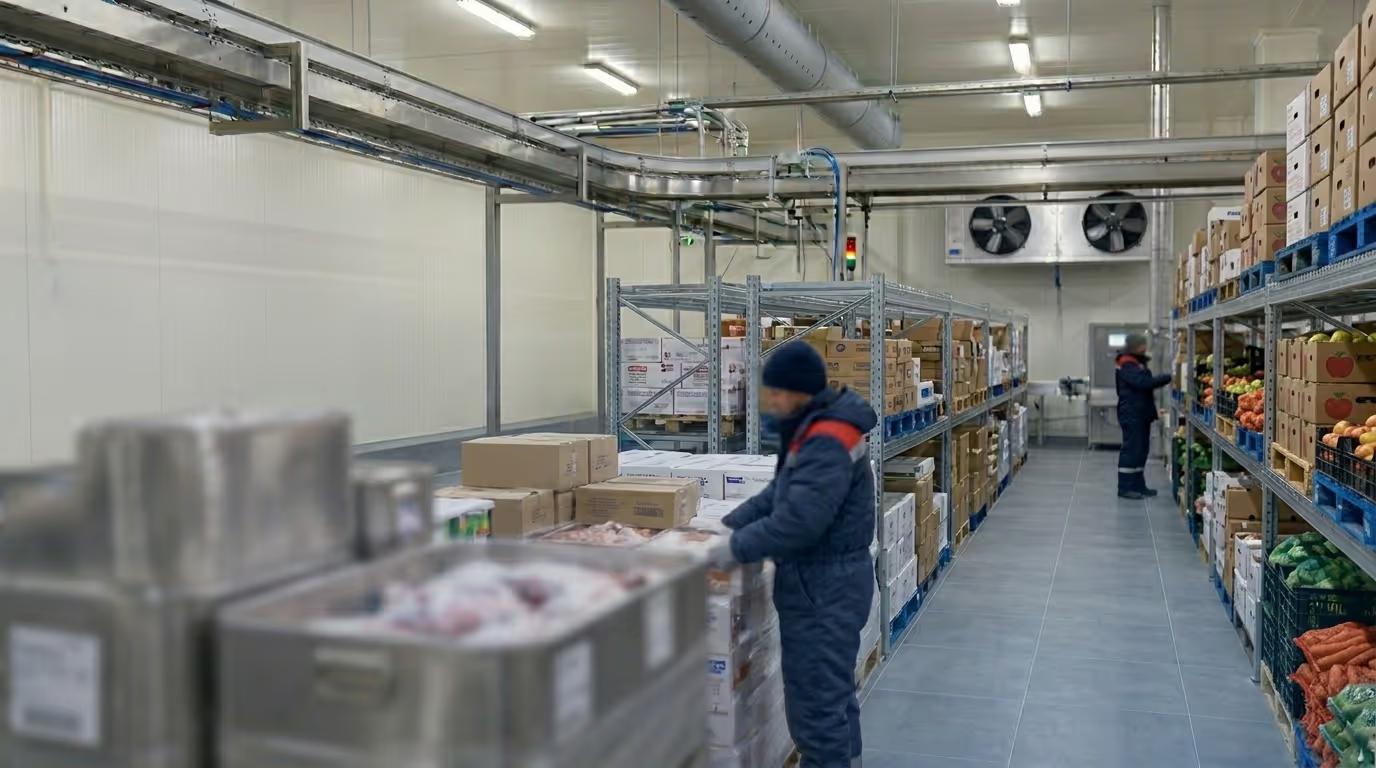

Compressed Air Solutions For
Logistics, warehousing & cold storage

LOGISTICS, WAREHOUSING & COLD STORAGE / QUEENSLAND

Keep the site moving. Make air supply dependable.

A workshop tool, pneumatic control or air-operated machine can become a bottleneck when pressure is unreliable. On a busy logistics site, the solution also needs to fit vehicle movements, operating shifts and service access.

QCAS plans, supplies, installs and maintains compressed air systems for pneumatic equipment and maintenance workshops within logistics, warehousing and cold-storage operations. We assess the equipment actually using air, then coordinate capacity, treatment and distribution around the way the site works.
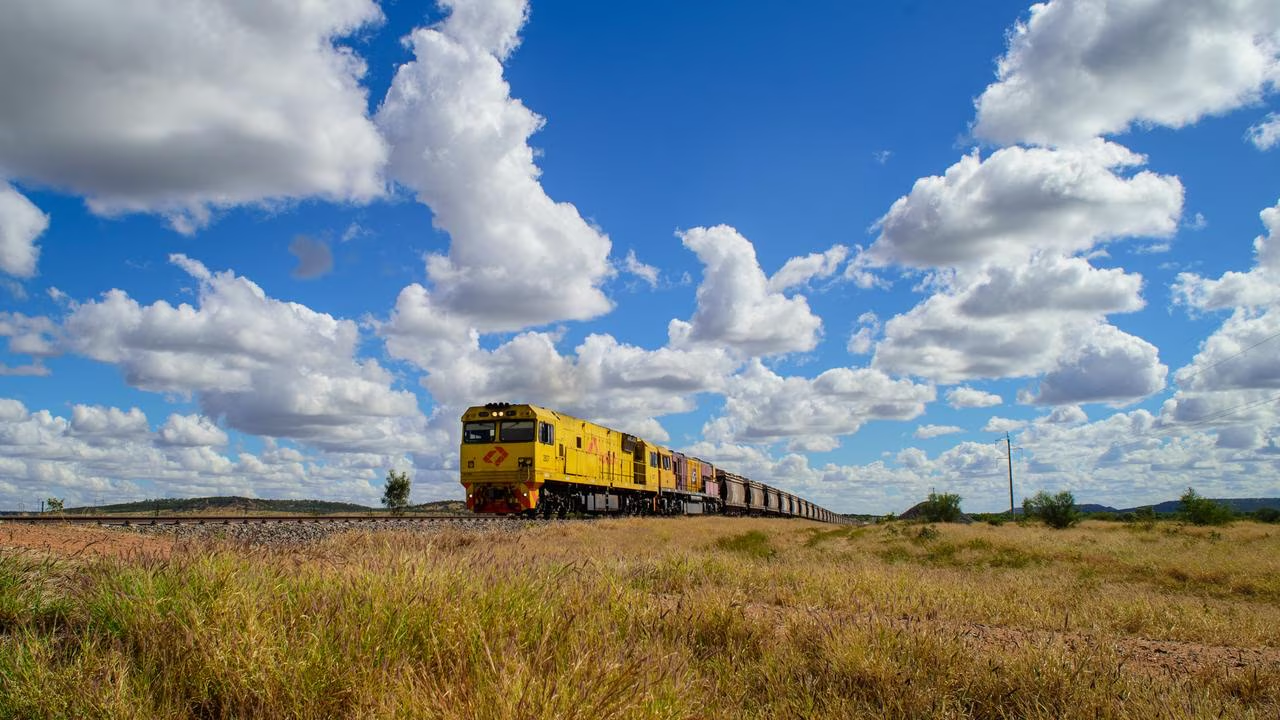
Practical systems for operating sites.

QCAS’s dual-compressor installation for Aurizon Toowoomba demonstrates experience in transport maintenance operations, supply resilience and equipment renewal.

START WITH THE JOB

Start with the air users across your site.

A warehouse, transport depot and cold store can have very different compressed-air demands. QCAS defines the air-system scope around your equipment and operating conditions; refrigeration requirements are considered separately.

01 / MAINTENANCE WORKSHOPS

Support the tools that keep fleets working

Pneumatic tools and workshop equipment can create intermittent demand, with peaks when several people work at once. Pressure needs to remain useful at the tool, not just at the receiver.

QCAS reviews airflow, operating pressure, storage and distribution to the workshop.

02 / AIR-OPERATED EQUIPMENT

Identify the loads that affect operations

Controls, actuators and other pneumatic equipment should be assessed from their manufacturer requirements and operating sequence. Equipment type and air use vary considerably between facilities.

QCAS uses your equipment schedule to establish the required capacity and treatment.

03 / SHIFT PATTERNS

Plan for the busy periods

Demand may change between maintenance shifts, seasonal peaks and additional work areas. A system that performs on a quiet day may have limited capacity when activities overlap.

QCAS assesses simultaneous loads, operating hours and planned expansion.

04 / COLD-AREA CONDITIONS

Check the environment at the point of use

Where air lines or equipment enter cold areas, moisture control and operating temperatures need careful consideration. The compressor and treatment package must suit the documented application.

QCAS considers air quality, temperature conditions and pipework routes in the air-system scope.

05 / LIVE SITE ACCESS

Coordinate work with site movements

Equipment deliveries, loading areas, traffic routes and contractor access affect how installation is staged. Connections and shutdowns need to fit the operating programme.

QCAS agrees work areas, preparation and changeover requirements with your facilities team.

06 / SUPPLY RESILIENCE

Match backup arrangements to operational needs

QCAS can assess the consequences of losing air supply and whether storage, multiple compressors or other changes are justified. The Aurizon dual-compressor project provides a relevant example; the right arrangement for your site depends on its loads, operating duty and priorities.

The compressor is only part of the system. QCAS can also specify compatible dryers, filters, receivers, condensate management and pipework to deliver air where it is needed.

FROM FIRST ASSESSMENT TO ONGOING SUPPORT

A clear scope. A workable site programme.

QCAS joins equipment selection, air treatment and distribution planning with the practical delivery requirements of an operating logistics site. We work with your facilities and operations teams to define the installation and ongoing support the air system needs.

Plan your system with QCAS

01 / Understand the operation

We identify the tools, machines and controls using compressed air, their pressure and airflow requirements and the periods when loads overlap. Existing assets, cold-area conditions, future work areas and available power also inform the recommendation.

02 / Specify, supply and install

We plan compressor location, ventilation, air-line routes and service access, then coordinate equipment supply and installation. Delivery routes, contractor requirements and connection windows are agreed with your team before the changeover.

03 / Maintain and improve

We support commissioning, handover, maintenance and fault finding. As operating shifts or equipment change, QCAS can review capacity, leaks and distribution performance to help prioritise the next stage of improvement.

Plan your logistics air-system assessment

Share your site location, air-operated equipment list, workshop requirements, operating shifts and existing compressor details. Include planned extensions, cold-area conditions, access restrictions and preferred work windows so QCAS can define the right installation and support scope.

Relevant QCAS project experience

Explore Aurizon Toowoomba for examples of QCAS work in this sector.

Discuss your site requirements

Start with system design and installation, compressor maintenance or an efficiency review. Contact QCAS with your location, equipment details and the outcomes your facility needs.

LOGISTICS, WAREHOUSING & COLD STORAGE / PROJECT FAQs

Your logistics compressed air project questions answered

What compressed air scope can QCAS deliver for a logistics or warehousing site?

+

QCAS can assess and deliver compressor equipment, air treatment, receivers and distribution for pneumatic equipment and maintenance workshops. We start by identifying the actual air users, operating pressure and simultaneous demand, then plan equipment location, pipe routes and service access. For cold-storage sites, the scope concerns the compressed air applications within the operation; refrigeration requirements need to be identified separately when defining the project.

What relevant transport and operational-site experience does QCAS have?

+

QCAS installed a dual-compressor arrangement for Aurizon in Toowoomba, supporting transport maintenance operations with improved supply resilience and the removal of obsolete equipment and pressure vessels. Our work for SLB in Roma also includes compressor equipment for laboratory and workshop test benches, commissioning and maintenance. These projects provide relevant experience in sites where dependable air, practical installation and continued service support matter.

Can installation be coordinated around dispatch, vehicle movements and operating shifts?

+

QCAS plans access, equipment deliveries, installation areas and connection work with your site team. Traffic routes, operating shifts, loading activities and critical equipment should be identified before the programme is agreed. Preparatory work can be separated from final connections where practical, with shutdown windows and expected interruptions defined in advance. Tell us about restricted access, contractor induction and any cold-area working constraints during the initial assessment.

How can QCAS plan for redundancy, peak loads and future expansion?

+

We review which equipment operates together, how demand changes between shifts and what happens if a compressor is unavailable. This informs capacity, storage, distribution and whether a multiple-compressor arrangement is justified. The Aurizon project is an example of a dual-compressor installation. For facilities adding new work areas or pneumatic equipment, QCAS can assess spare capacity and pipework requirements before expansion creates pressure losses or supply constraints.

Can QCAS maintain existing compressors and support a staged site upgrade?

+

Yes. QCAS provides servicing, inspections, fault finding and air-system assessments as well as new installations. We can review existing equipment and distribution, identify priorities and define an upgrade scope around operational needs. Maintenance planning considers run hours, equipment requirements and site access. Provide your location, compressor details, operating shifts, air users and planned changes so we can confirm the assessment, installation and ongoing support arrangements.

Relevant experience in transport and operational sites